Feeding Vegetables to Dogs - Is It Species-Appropriate?
"Dogs are carnivores" - what do carrots, broccoli, and co. have to do in your four-legged friend's bowl? Well, quite a lot! Because even though our dogs descend from wolves and therefore enjoy a juicy piece of meat between their teeth, vegetables also belong to a →species-appropriate and balanced diet for dogs.
If we take a look at the wolf's menu, it quickly becomes clear that it does not only pick out the tender muscle meat, but also devours its prey with skin and hair or cartilage and organs, including the plant remains in the stomachs of its prey. Its daily menu is complemented by fruits like berries or other greens, which is why dogs are classified as carnivores and omnivores (“carnivorous-omnivorous”).
Therefore, the feeding of vegetables and also fruits is essential for our four-legged friends. Just like us humans (and wolves), they are dependent on the vitamins, fiber, and trace elements contained in vegetables. Thus, feeding vegetables contributes to the maintenance of your four-legged friend's health and can even lead to deficiencies and health restrictions if the intake is insufficient.

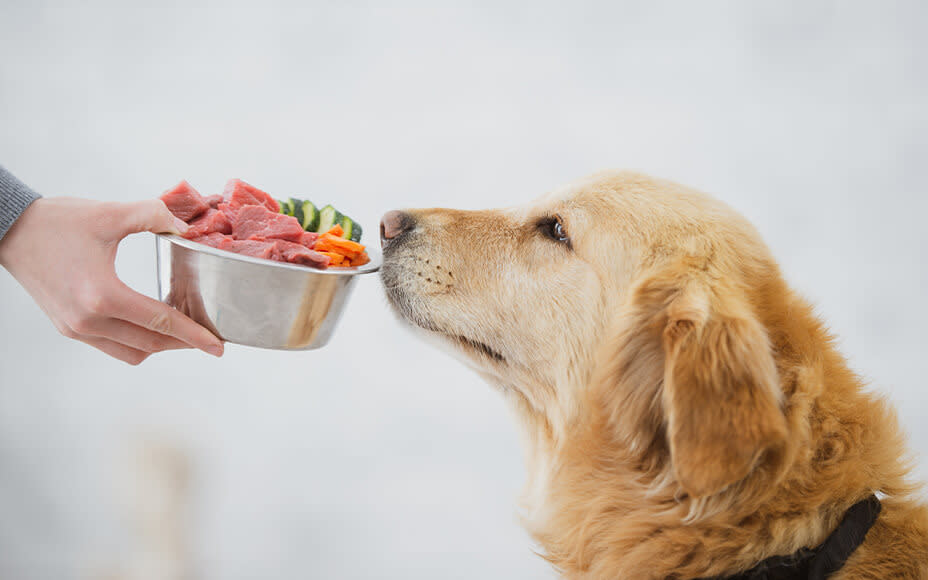
In addition to meat, vegetables are definitely something that should not be missing from any dog's bowl. Not only do they taste delicious to our four-legged friends, they also contribute to maintaining their health.
Which Vegetables Can Dogs Eat?
But before you rush to the next vegetable aisle in the supermarket, please note that not all vegetable varieties that are suitable for us humans are also good for your four-legged friend. It is also important to mention that a →high-quality complete feed for dogs already contains all the important nutrients. Meat, vegetables, and fruits as well as fats and minerals are already present in sufficient quantities and usually do not need to be supplemented.
Only the best of the best goes into our food. In addition to juicy meat, our range includes various types of vegetables such as carrots, broccoli, pumpkin, fennel, sweet potatoes, celery, beets, and much more. Stop by and discover your furry friend's new favorite food now!
Unser Futter für Hunde: gesund, ehrlich, lecker.
Vegetables for Dogs That Can Be Eaten Raw
These vegetable varieties can be easily eaten raw by your dog. They usually do not cause bloating and are, when finely chopped or pureed, easily digestible.
Chicory
Chinese cabbage
Fennel
Kohlrabi
Beets (in small amounts, but not with kidney disease or bladder stones)
→Leafy greens like lettuce, iceberg lettuce, lamb's lettuce, and leaf lettuce
If your dog is not used to being fed raw vegetables occasionally, start with a small amount and gradually increase. Due to the numerous fibers in vegetables, it can otherwise lead to →stomach pain. A little tip: Feed raw vegetables to your dog with →some oil, as this helps the nutrients to be better absorbed.
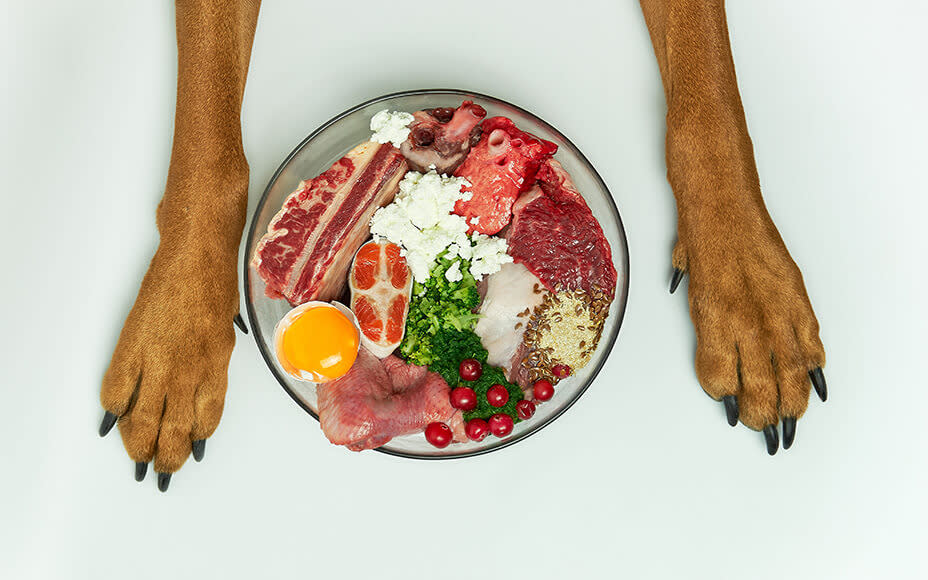
High-quality fats in the form of oils can help the nutrients from vegetables to be better absorbed.
Vegetables for Dogs That Should Be Cooked, Steamed, or Boiled
These vegetable varieties should be cooked, steamed, or gently boiled before feeding. Some of them can otherwise sit heavily in your dog's stomach and lead to digestive problems. Thanks to gentle preparation, you ensure your four-legged friend receives the full vitamin load without discomfort!
Kale (only in small amounts)
→Pumpkin (only from the supermarket)
→Corn (no field corn and no cobs!)
→Some types of mushrooms like champignons, porcini, chanterelles
Zucchini (only from the supermarket)
Toxic Vegetables That MUST NOT Be Fed to Dogs
As mentioned earlier, there are also vegetable varieties that you might enjoy very much, but which are not well tolerated by your four-legged friend and can be →even toxic**. To ensure nothing wrong ends up in your dog's bowl at home, take a close look at the following vegetable varieties:
Eggplants (cooked, small amounts can be tolerated)
Raw green beans
Raw legumes
→Garlic and other allium species
Bell peppers
→Onions and other onion species
Did you know that raw →tomatoes are not necessarily toxic to dogs? This is →a myth. Only unripe, green tomatoes contain the toxin solanine, which is toxic to our four-legged friends (and us humans). Very ripe tomatoes, on the other hand, contain little to no solanine, but are still often poorly tolerated by our dogs. If the consumption of ripe tomatoes leads to digestive issues and vomiting, this can mistakenly be interpreted as poisoning symptoms.

Which vegetables can dogs eat? Take a look at our overview!
Help, My Dog Ate Toxic Vegetables!
Has your dog sneaked some bell pepper or another "forbidden vegetable"? Depending on the size and weight of your four-legged friend, the first symptoms of poisoning can set in quite quickly. Initial signs of poisoning are heavy panting, restlessness, and trembling.
But don't panic; a clear head and quick action are important now! In a veterinary clinic, your dog will be made to vomit with an injection, so that the toxic vegetables are expelled as quickly as possible. It is important that you do not act on your own - do not attempt to make your dog vomit yourself. Also, remedies from the home pharmacy are toxic to dogs and therefore taboo.
Don't panic on the Titanic! If your dog has tasted some of the ‘forbidden fruit’, vets can help quickly and your pet will soon be feeling better.
Which Vegetables Are Good for Dog Digestion?
If your four-legged friend has a sensitive stomach, you can preferably rely on the vegetable varieties pumpkin, zucchini, carrots, and potatoes. Peeled, cooked, and then pureed, they are easily digestible and easy to digest.
Carrots, rice, and chicken cooked together in a pot create a soothing diet that you can feed your four-legged friend for 3-5 days if he is struggling with →vomiting or →diarrhea. It needs to be quick, and you don't have time to stir the pot yourself? Then just open a can of our special →wet food "Vet" Stomach & Intestines Fit with chicken, cottage cheese, and rice.
Behandlungsbegleitend an eurer Seite: Pets Deli VET
How Much Vegetables Can a Dog Eat?
If you want to regularly feed vegetables to your dog, you should adjust the amount to your four-legged friend's daily nutrient requirements. If you feed your dog dry or wet food, all individual food components, such as proteins, vitamins, carbohydrates, minerals, fats, fibers, and trace elements, are already present in sufficient quantities. This means that everything you feed your dog in vegetables is on top and should actually be deducted from his food. This is naturally not so easy with a complete feed, which is why you should limit it to an occasional carrot or a piece of kohlrabi.
If you want to regularly feed vegetables in larger quantities, perhaps the →concept of BARFing is something for you: Here, you prepare your dog's food fresh. This means you put together the meal with its individual components like meat, vegetables, and carbohydrates yourself. The respective quantities must of course be tailored to your dog's needs and weighed individually.
You'll love to try BARF!
Does that sound too complicated? Once you get the hang of it, followers of BARFing do not want to miss this way of feeding, but we can understand if you find it too cumbersome. That's why we developed our →"BARF Complete", with which you can feed your dog uncomplicatedly while using delicious, fresh ingredients. The menu already contains everything your four-legged friend needs daily: fresh meat, fruits, and vegetables as well as minerals and oils. Everything weighed and pre-portioned, super fresh and delicious!